
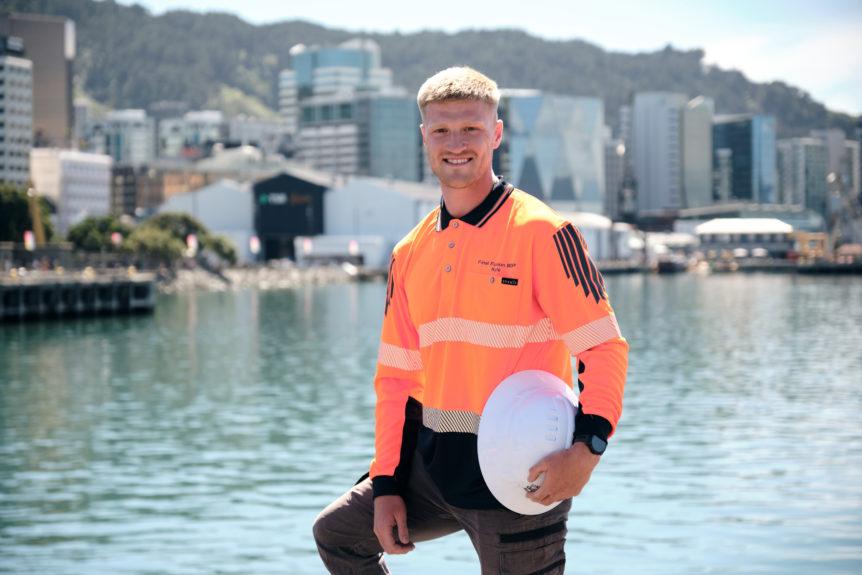
Kyle Fuller’s civil and water career began in the UK in 2019 where he worked on pipe installation and maintaining water mains. Then a visit to New Zealand on holiday changed everything.
Deciding to move here permanently Kyle began working for his uncle at Final Fusion where he is now a water supervisor and foreman, supporting major contractors and working alongside other civil companies to help deliver water infrastructure projects for the small Bay of Plenty contracting company.
Kyle, who completed his NZ Certificate in Pipeline Construction and Maintenance (Level 4) with Connexis, says though he has previous UK experience, training has been a key part of his career in New Zealand.
“I started off here just learning the fundamentals of what I needed to do in this country, because the standards are completely different.”
Since then Kyle has gone from strength to strength within the company, and is a huge advocate for the importance of training and its benefits for trainees and small civil businesses – as well as the general public.
“There are a lot of challenges in the industry and it’s pretty competitive, so being able to train and develop our staff is really important for the business. But it also helps strengthen the civil infrastructure sector and improve the networks the public rely on. At the end of the day, that’s why we do this work — it’s for the public,” he says.
Training also helps everybody adapt to the needs of the job on the job, which can vary greatly.
“You need the ability to be able to think on your feet and come up with a solution to the job at hand, while providing the best service that you can.”
Part of Kyle’s current role is to work with the company’s apprentice as they learn on the job.
One of the biggest lessons Kyle has learned from working with the Final Fusion team is that there is more than one way to correctly complete a job.
“There are multiple ways to get to the number 10; or the end result. We all have our own way. As a leader, it’s not necessarily about telling someone how to do it. It’s giving them the opportunity to figure it out as well. At the start of the day you have your briefing, and you might need to lay 12 meters of pipe, but how someone trenches it or where they put their dirt, might be completely different to how you’d do it. So it’s about allowing them to give it a go, or let other people lead as well, because that’s what allows them to develop as a person, and from an apprentice into a leader.”
For those considering a civil apprenticeship Kyle says it offers great opportunities, though the first six to 12 months can be challenging.
“The key thing is to just be patient, keep learning, be clear minded and just keep showing up. It’s always going to be hard getting started because you’re figuring out something new, as well as learning about the people around you, but if you’re open-minded and start building a relationship with the team around you, that’s what’s going to help see you through.”